Share Cheryl Patricia Armstrong Fogg's obituary with others.
Invite friends and family to read the obituary and add memories.
Stay updated
We'll notify you when service details or new memories are added.
You're now following this obituary
We'll email you when there are updates.
Select your format and elements to print

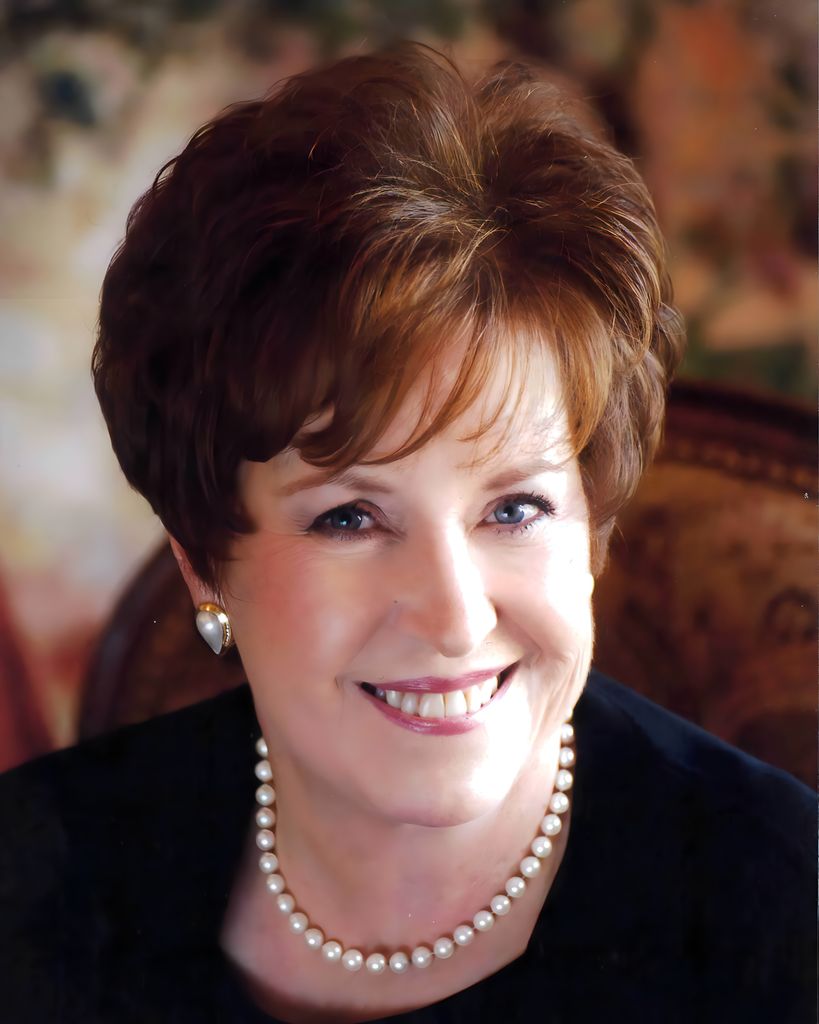


Cheryl Patricia Armstrong Fogg
Jun 3, 1938 — Mar 9, 2026
Bountiful, UT
Cheryl Patricia Armstrong Fogg, 87, passed away peacefully at her home in Bountiful, Utah, on March 9, 2026, surrounded by all her children. She was born on June 3, 1938, in Idaho Falls to Melvin Stanford Armstrong and Golda Reading Armstrong.
Cheryl grew up on three acres in Ammon, Idaho—the third of six children. The family property had rabbits, chickens, pigs, lambs, horses, and an irrigation ditch that ran right through it. That meant lots of chores, but the family also had fun. Cheryl wrote, “Our family loved to gather around the piano and sing together.” She also noted that on warm Sunday afternoons, water fights near the ditch would start with a flick from someone’s fingers and then escalate to full buckets until many were drenched.
As a child on the farm, Cheryl’s favorite hideout was an apple tree where she’d climb with a book and a salt shaker so she could read and eat apples at the same time. But farm life also posed hazards. Her brother Blair talked six-year-old Cheryl into riding their bull, Ferdinand. The bull turned into the barn, Cheryl fell into the manure trough, breaking her wrist. Cheryl went to school the next day with a cast . . . and a story she would tell for the rest of her life.
Cheryl and her younger sister Beverly were inseparable growing up. The two girls invented a private language so convincing that strangers thought they were from New York. Inventing a language for fun required brains and imagination. These two qualities showed up in everything Cheryl did for decades to come.
Cheryl created beauty and joy in the world through music. She began in earnest at age seven, taking piano lessons. As she wrote, “I took to piano like a duck to water.” By nine she was competing at the regional festival in Pocatello. At eleven she became her father's accompanist. He had a beautiful tenor voice, and together they performed at events around Idaho Falls. At thirteen she was called as Sunday School organist. This was a big responsibility, and she was thrilled.
Cheryl was industrious from a young age. At nine she sold seeds from a comic book ad and earned enough to buy her first camera. At twelve she was picking potatoes with her mom —ninety to a hundred baskets a day. At fourteen she worked as a carhop at Mrs. Pope’s Drive-In. Cheryl was so impressive as a young worker that Russell Fogg (her future father-in-law) recruited her from another job to serve customers at the soda fountain in his Idaho Falls pharmacy.
In high school Cheryl was hired as the head office assistant for the principal. She was also voted Class Favorite, elected Pep Club president, and won an Elks’ scholarship for “Most Valuable Student.” Her excellent grades earned her the honor of class salutatorian. On the stage she played “Ann” in Cheaper by the Dozen. During those high school years she grew to nearly five feet ten inches tall. She later noted that her “boyfriends were getting shorter and shorter.”
Music was her deepest passion, but Cheryl had other gifts. She was a brilliant learner throughout her life. She had perfect penmanship and could spell anything. Cheryl could recite the alphabet backwards, a skill she mastered before kindergarten. From a young age, she was a gifted writer, and she learned to type at blazing speed without errors. She was a leader who could organize people and events.
At BYU she declared a major in elementary education, only because she couldn’t afford to pay for the lessons required in the music major. Even so, at BYU Cheryl was deeply involved in music. She wrote, “Music became my love and my life!” One highlight: Cheryl sang in the top-notch BYU A-cappella Choir. Their group recorded with the Philadelphia Orchestra to create music for the Hill Cumorah Pageant, an experience she treasured all her life. In addition to music, her lifelong commitment to helping young women showed up clearly when she was elected the BYU Vice President of the Associated Women Students, an organization with over 5,000 members.
In the summer of 1958, she noticed Gary Fogg at a church dance in Idaho Falls. Their first date was June 29—Gary’s birthday. Cheryl arranged the second date. They went on a group picnic in the sand hills by Ammon. While frolicking there, the inner seams of her new pedal-pushers split wide open. She quietly slipped away in the dark to change, and Gary spent a few hours wondering why she’d left with another guy (she reappeared later, with pants repaired). On a third date at Heise Hot Springs, organized by Gary, Cheryl hid in the dressing room, dreading being seen in a swimsuit—“skinny in all the wrong places!” She finally ran out and jumped over Gary’s head into the water.
Things moved quickly after that. By November of 1958, at the BYU Preference Ball, Gary removed his fraternity pin from Cheryl’s dress. Her heart sank . . . until he produced a diamond ring. She was thrilled, and her bright blue eyes probably shone even brighter. Later she wrote, “I felt just like Cinderella at the ball that evening!”
Cheryl and Gary married on a snowy December 30, 1958, in the Idaho Falls Temple. After the evening reception, the newlyweds hid from pranksters in the church bathroom; Cheryl covered Gary with her white wedding dress so no one could see him through the milky glass window. They escaped by dashing through snowy backyards and diving into the back seat of an unlocked car in a stranger's driveway.
After Gary entered medical school, Cheryl transferred to the University of Utah and finished her degree in elementary education while pregnant with their first child, Linda.
It was in Salt Lake City that Cheryl achieved a lifelong dream: she auditioned for the Mormon Tabernacle Choir and was accepted as a first alto. For three years she sang under director Richard Condie and sat near Jessie Evans Smith, wife of the Prophet. She described the experience as "being immersed in 360 glorious voices, thrilling my soul with the beauty and the majesty of heavenly music."
Gary and Cheryl’s first apartment in Salt Lake City was so small that sitting in the living room, their knees touched, and lying in bed they could reach all four walls. As a young mother, Cheryl earned money for the family by playing organ or singing at funerals. After each service, she came home with ten dollars and an armload of fresh flowers. She continued raising her family and making music as Gary’s training took them briefly to Dallas, St. Louis, and El Salvador. They were planning to return to Utah to settle and raise a family.
Cheryl knew that all of her great-grandparents — every one of them — had sailed across the Atlantic and trekked across the plains to gather with the Mormons in the 1800s. In 1967, she would be the first of her family to leave the land of her pioneer ancestors in Utah and Idaho. That’s the year Gary was offered a partnership in an ophthalmology practice in Fresno, California. Cheryl was sad to leave her roots and her family, but she was willing to make that sacrifice for Gary and for her family's future. She poured herself into building a new life in the Central Valley.
In the coming years, more souls joined the family to complete the Fogg Seven: Linda, Steve, Brian, Mike, Kim, Becky, and Greg.
Cheryl was the CEO of her home in Fresno. Family prayer every morning, scripture study daily, family home evening every Monday—Cheryl made sure of all of it. Following church leader guidance, she maintained a full year’s supply of food storage, with some of it tucked under each child’s bed. For Cheryl’s kids, chores were non-negotiable: babysitting, laundry, weeding the garden, mowing the lawns, painting the pool fence, cleaning the boat port.
Each Sunday, Cheryl insisted the family have dinner in their formal dining room, with all the fancy touches. For example, she made sure that her children set the table properly (the small fork goes outside the big fork). Cheryl was an adventurous cook who whipped up recipes from countries she visited. She also drew on her Idaho roots to feed her family of nine every day. Her children confess their mom could be a drill sergeant in the kitchen. Cheryl knew what she wanted, and all her kids learned to cook and follow directions.
Cheryl traveled to many exotic places, but her favorite trips were to Swan Valley, Boise, Merced, and Farmington — the towns where her brothers and sisters lived. Again and again, she and Gary would load the kids into the station wagon and drive for hours, because reuniting with family was never negotiable. Cheryl lived for Armstrong reunions, Fogg reunions, a big family Thanksgiving, and Christmas with cousins. She made sure her children built bonds with their cousins and honored their roots. She believed family closeness was something you built on purpose, mile by mile, year after year.
In Fresno, Cheryl wanted her children to have musical opportunities, so she took steps to make it a reality. She organized her own kids into a performing trio called “Two Hits and a Miss” when Linda was 9 and the boys were 5 and 7. As they grew and other children joined the Fogg family, she kept building: the “Dainty Darlings,” the “Juvenaires,” the “Sunshine Company,” “Young Inspirations”—a group of twenty-four to thirty teen girls who sang three- and four-part harmony with choreography. That was followed by “Encore,” a polished SATB ensemble. Cheryl described her motivation this way: “Our children need music in their lives! I decided I could offer my abilities to the youth in our area and make a difference.” Former members of her groups wrote letters to Cheryl years later, telling her how those musical experiences had given them confidence, lifelong friends, and a love of music they carried into adulthood.
Cheryl also directed large-scale church productions that became landmark events in Central California. In 1977, she directed 101 cast members and 38 orchestra members in the musical The Order Is Love. The show played for four sold-out audiences at Fresno’s premier performing center. Later, she directed a 275-voice stake youth choir in From Cumorah’s Hill. Through these and other productions, she changed lives. One parent told her: “Our son is a changed person since this began, and the music coming out of his room is beautiful instead of awful!”
Without being asked or assigned, Cheryl created a program at church to teach teenagers how to lead congregational music. She trained small groups after church, focusing on hymns that the teens knew and loved. In the weeks that followed, each teen would stand before the entire congregation and lead the hymns during a Sunday service. Nobody told Cheryl to do this. She simply saw an opportunity to build skills and confidence in young people and seized it. As she wrote: “Working hand in hand with the Lord to touch lives is the most wonderful thing we can do on this earth.”
The hardest thing Cheryl ever faced was losing her youngest son, Gregory. He was diagnosed with leukemia at age three. Over the five years that followed, Cheryl watched her son submit to needles, radiation, and chemotherapy. To lift his spirits, she invented a character named Bobby and told Gregory stories about Bobby's adventures during the long hospital stays. Cheryl slept in his hospital room during isolation and spent hours in prayer in the hospital gardens. Gregory passed away on July 5, 1985. That day, the family knelt together around his bed and gave thanks for his life. For Cheryl, the loss was devastating.
Immediately after Gregory’s death, one of their children saw Cheryl and Gary hugging tightly in the corner of the hospital room. They held on for a long time, shaking together and crying, as though no one was watching. It was painful for a child to witness, but it also radiated the deep love and commitment of their parents' holy union. In happier moments, their kids remember how Cheryl would sing Gary's name as he arrived home from work. They recognized Gary's admiring eyes as he watched his sweetheart conduct a choir with such skill. They got glimpses of their parents kneeling together, holding hands, as they prayed with faith. This was the love story Cheryl had dreamed of since girlhood.
Cheryl’s devotion to the gospel of Jesus Christ was expressed through decades of hands-on service. She served as Laurel advisor, MIA President, Relief Society leader, stake music director, and ward choir director. As a seminary teacher for five years, she was up before dawn every morning to teach teenagers the gospel, while raising her own large family. As a Young Women leader, she poured herself into helping girls find their footing. Cheryl was invited to speak at BYU Women’s Conference, delivering a talk titled “Touch Our Eyes That We May See,” drawing on her life’s joys and sorrows to testify of God’s love. In that talk, Cheryl said, “Broken hearts are what give us strength and understanding and compassion.”
In 2000, Cheryl and Gary were called to serve as missionaries at Temple Square in Salt Lake City. That’s when Cheryl formed a choir of 48 sister missionaries, some of whom had never learned to read Western music or even speak English very well. With patience, prayer, and what Cheryl believed was the help of angels, they made beautiful music together. From 2003 to 2011, Gary and Cheryl also served multiple LDS humanitarian missions, paying their own way to bring medical expertise to 26 developing countries, including Romania, Nigeria, and Liberia. In 2011, Gary and Cheryl began their calling to be temple workers in the Bountiful Temple.
After Cheryl moved to Bountiful as an empty nester, she devoted herself to family genealogy and personal histories. She oversaw the historical collections for the Fogg and Armstrong sides of the family. She wrote life stories for at least five family members, including her husband and her own parents. Focusing on her immediate family, Cheryl wrote heartfelt memoirs and created a detailed scrapbook for every year starting in 1980 until Parkinson’s got in the way. Her children knew she was a faithful keeper and creator of family history. However, only after her passing did her kids fully recognize the quantity and quality of her extraordinary work.
Cheryl and Gary were blessed with seven children: Linda Fogg-Phillips (Brent, deceased), Steven (Stephanie), Brian “BJ” (Dennis), Mike, Kimberly Steele (Lex, deceased), Rebecca Fife (David), and Gregory (deceased). Cheryl and Gary have 25 grandchildren, 29 great-grandchildren, and one great-great-granddaughter.
Cheryl’s grandchildren called her “Nana,” and she earned the title. Cheryl faithfully attended the grandkids’ sporting and musical events. For the summer months, she created a program she called “EFG”—Especially for Grandkids—a weeklong camp at her home where grandchildren sang, made apple pancakes on the deck, hiked to Elephant Rock, collected 110 snails from her garden, and visited Gregory’s grave to leave flowers and sing “I Am a Child of God.” It was pure Cheryl: built from nothing, powered by love, and remembered fondly forever.
Of all the things Cheryl did with music, her children believe her favorite was the simplest: gathering her family around the piano to sing together. She could play any tune you suggested without sheet music, and she could change keys at a moment's notice. It seemed like magic. When Cheryl would call everyone into the piano room, most of the kids acted reluctant. But deep down, they were glad for the togetherness and a mother who never critiqued a wrong note. The Fogg kids knew their mom was talented enough for a professional career in music, yet she chose instead to sit at the family piano and sing with them.
Cheryl brought beauty into everyday life. Bows on the napkins. Fresh flowers in the bathrooms. A Christmas tree that looked like a work of art. She wrapped gifts so exquisitely that opening them felt like an event. Cheryl spoke with beautiful words: her favorite exclamation was "Oh, goody!" She called her grandkids "Darlin'." And when she prayed, she voiced her devotion in beautiful ways that uplifted everyone.
In 2017, Cheryl was diagnosed with Parkinson's disease. This was a surprise. But it was all too familiar — her beloved father had suffered with Parkinson's for the last 18 years of his life. She knew firsthand the challenges on the path ahead. During these increasingly difficult years, Cheryl relied on her family, her faith, and her music. Even as her skills declined, Cheryl kept playing the piano. Gary would sit and listen. Kids and grandkids would gather and sing. Cheryl knew she wasn't the pianist she once was, but her family valued every note all the more.
Near the end of her life, Cheryl wrote a message to her family: “I am so proud of my posterity, and I want them to know they are the world to me. I pray my posterity will see the worth of each soul, and treat each other with love, esteem, and kindness.”
Cheryl’s beloved husband passed away five months before she did. On that October evening, she was gathered with her children, and she declared it “a joyful day.” Despite the loss, her faith was strong, her vision was eternal. A few months later, when her kids asked her to make a wish for Christmas, she said, “to go back home.” The message was clear: she longed to be reunited with Gary, Gregory, and so many other people she loved on the other side.
The family believes Gary, Gregory, and others were present in spirit as Cheryl passed, surrounded by loved ones in their Bountiful home.
Throughout her 87 years, Cheryl exemplified faith, creativity, and selfless devotion. She lifted thousands through her music — from productions that filled auditoriums to her own family singing around the piano together. She devoted her life to the gospel of Jesus Christ, serving her church for decades as seminary teacher, Young Women leader, choir director, and missionary. She built a family culture rooted in hard work, faith, beauty, and love. Cheryl's influence will continue through the generations she shaped, the young people she believed in, and the music that will forever carry her spirit forward.
-----
Graveside services will be held at 10:30 a.m. on Friday, March 27, 2026, at the Farmington City Cemetery, 500 South 200 East, Farmington, Utah. A viewing will be held Thursday evening from 6:00-8:00 p.m. at the Mueller Park Stake Center, 1800 Mueller Park Road, Bountiful, Utah.
Broadcast schedule on ZOOM - https://bit.ly/Cheryl_Fogg
10:30 am MT Graveside service - 1:00 pm MT Celebration of Life: Music and Memories
Service Schedule
Past Services
Viewing
Thursday, March 26, 2026
6:00 - 8:00 pm (Mountain time)
Mueller Park Stake Center
Graveside Service
Friday, March 27, 2026
10:30 - 11:30 am (Mountain time)
Farmington City Cemetery
Guestbook
Visits: 1541
This site is protected by reCAPTCHA and the
Google Privacy Policy and Terms of Service apply.
Service map data © OpenStreetMap contributors